
1/30/2024
2022 was for many of us a lost year. In my case a fallow year where Nurse Tree Design accomplishments and momentum were at a low point. My wife and I dodged Covid, and focused on a slew of other health problems. Even so, 2022 was a test for the garden and Earth Arch. Sandwiched between the July 2021 Wettest Month on record, and 2023’s Hottest July on record, 2022’s claim to records was its July 12 high low temperature of 88˚ F.. 2022 was the 9th warmest year on record and the 13th driest year on record. This continues the 25-year trend of increased drought and dry conditions. Meanwhile 2023 goes into the record books in a tie with 2014 and 2016 as the 3rd warmest and 55th driest on record.
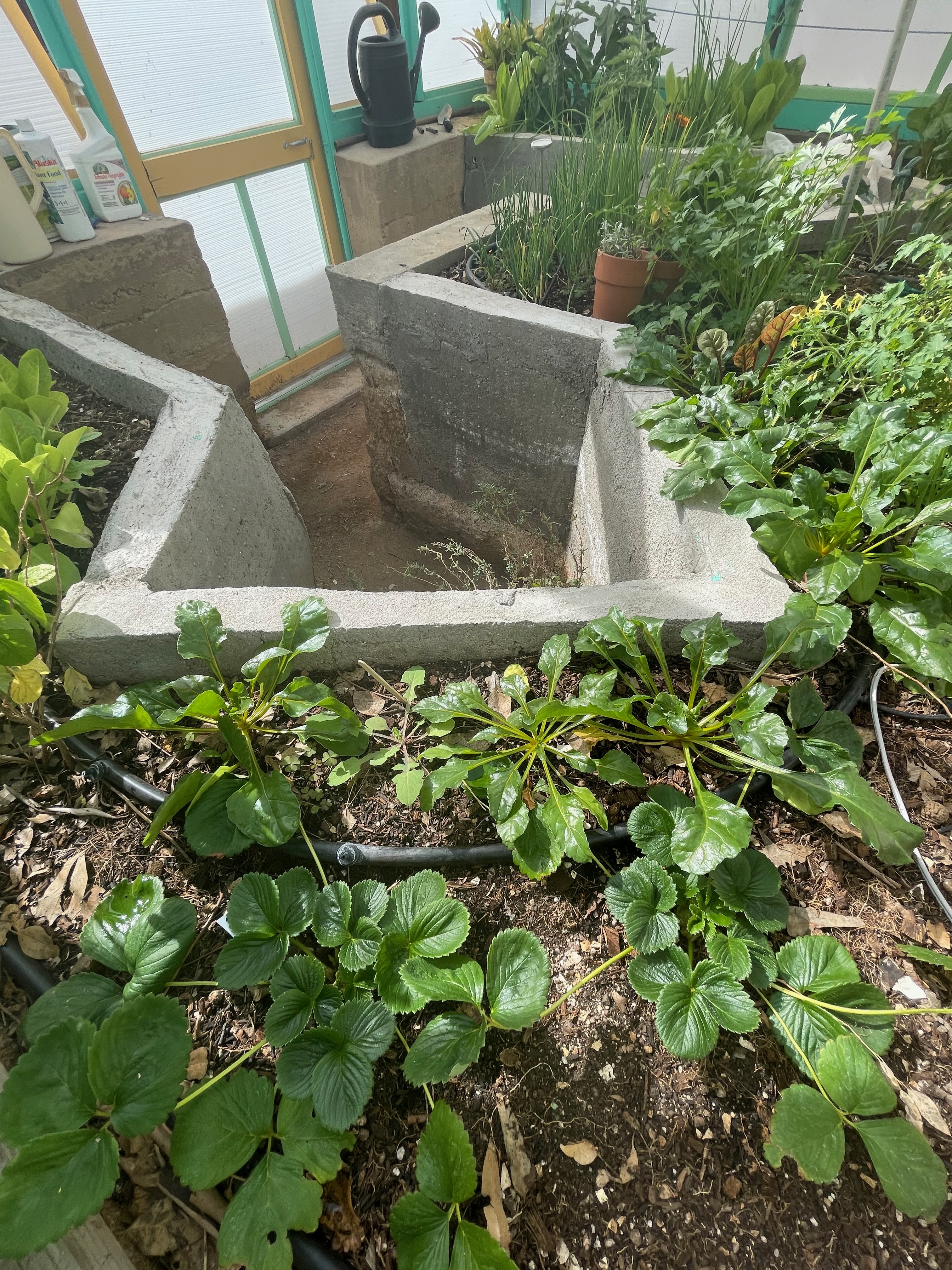
The Earth Arch prototype and its plywood components are showing their age, yet still doing the job they were designed for. Several of the Solexx panels are in need of repair or replacement. New row cover is hanging inside. The soil is in good shape, worms are waiting for the next application of compost coming soon. Better yet, the seeds planted in compost-able cups in mid-September are mature. Eggplant fruit are nearly ready for harvest. Lacinato kale is ready for warm weather to speed growth, and harvests of Jerico, Parris Island Cos lettuce, and rainbow mix chard are all showing up at our table in January. The arch got these and several varieties of tomato through several mid-twenty freezing nights.
One activity that ties the last three years together is a concerted effort to write a book about the Nurse Tree Design process over a dozen years. Five of Eight chapters are nearly ready for editors. It’s humbling to research a past that is so much about the gardener as it is the garden in a time of changing climate. Here is a taste of two chapters:
Chapter 1: Imagine it is 1973 and you are a teenager who tends a patio garden in an adobe house somewhere in the Sonoran Desert… After growing up in this remarkable desert you leave. An inescapable taste for travel takes you far away from this garden and your heritage home. You don’t return for 50 years. It is Summer 2023. Your sentimental expectations are profoundly upset by what you see. The climate has changed.
Chapter 2: In studies about human and plant health in the heat, the range of 86˚ to 90˚ F. (30˚ C. -32˚ C.) appear as tipping points for cardiovascular health in humans and cellular stress in plants. Trees and shrubs enjoy optimum growing conditions when the temperature ranges between 60˚ – 85°. The magnitude of heat stress increases rapidly as the air temperature rises above 85°F. The thermal death threshold for most plants, including cacti, is reached at 115°F, but varies with the duration of the hot temperatures, the absolute highest temperature reached, tissue age, the water content of tissue, and the ability of the plant to adjust to temperature changes.
Finally: a look at what is in the Earth Arch today (1-30-24)
 nursetree.design